How can drones support energy infrastructure?
Drones can support energy infrastructure by providing safer and more flexible visibility of assets, sites and difficult access areas. They can be used for inspections, surveys, monitoring, mapping and condition records across powerlines, pylons, substations, solar sites, wind assets, pipelines, industrial energy sites and supporting infrastructure.
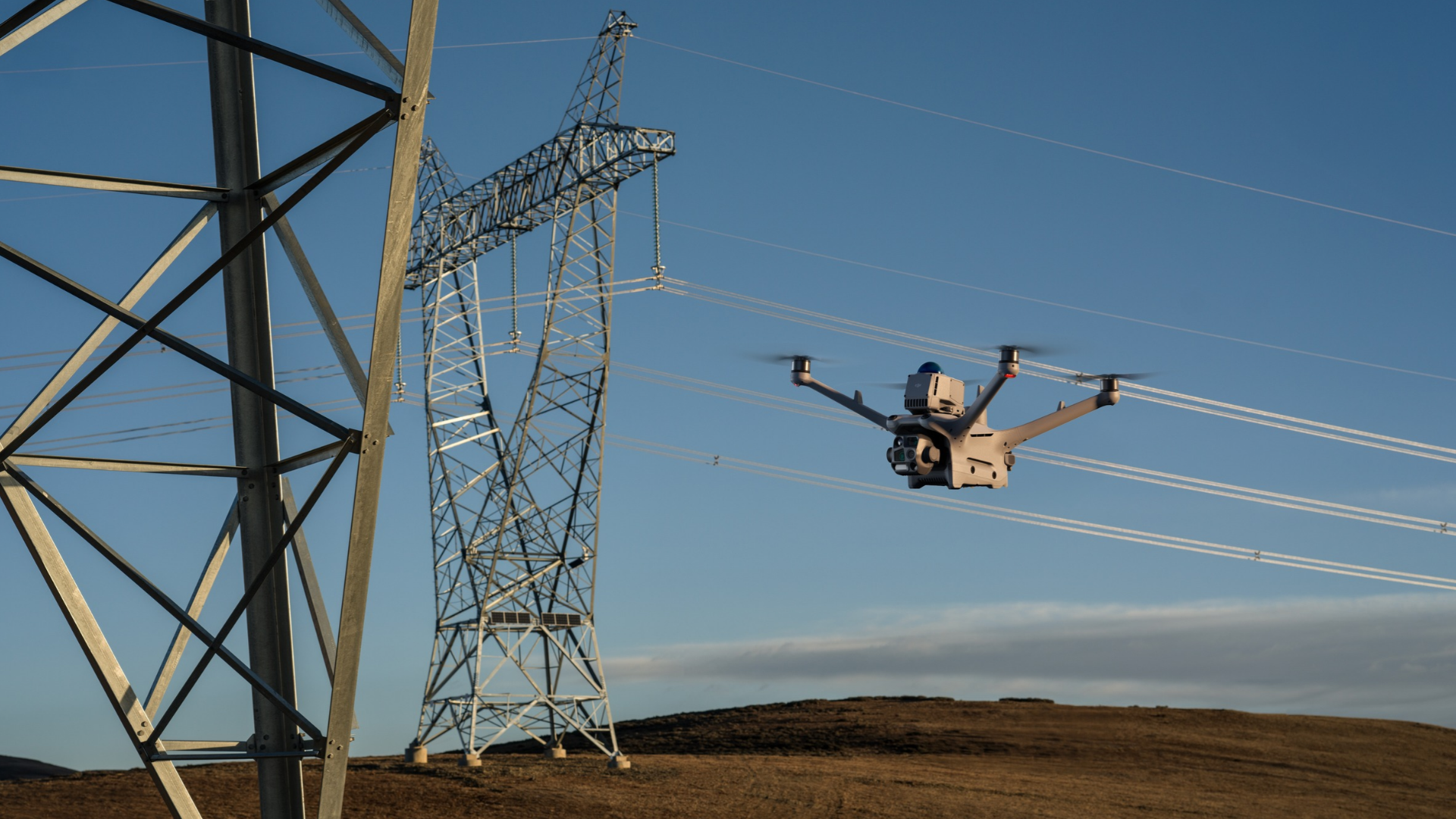
For energy teams, the value is not just aerial imagery. It is having clearer information to support maintenance, asset management, safety and operational decision-making.
Drones can support inspection and monitoring of energy infrastructure.
They can capture visual, thermal, LiDAR and mapping data where suitable.
Drone data can reduce the need for some manual access methods.
Repeat monitoring can help teams track condition and change over time.
DJI Dock 3 may support more regular remote monitoring where the site and operating model are suitable.
What does this mean?
Energy infrastructure often includes assets that are spread across large areas, difficult to access or operationally sensitive.
This may include pylons, powerlines, substations, solar farms, wind turbines, pipelines, rooftops, access routes, industrial structures and surrounding land. Drones can help capture data from above, around or near these assets, giving teams a clearer view without making physical access the first step.
Depending on the project, the data may include high-resolution imagery, video, thermal data, LiDAR, point clouds, orthomosaics, inspection records or progress updates.
For sites that need regular visibility, remote monitoring workflows and drone-in-a-box technology such as DJI Dock 3 may also be relevant where suitable.
Why does it matter?
Energy infrastructure needs regular inspection and monitoring to support safety, reliability and long-term performance.
Traditional inspection methods can involve height, difficult access, live environments, restricted sites or significant planning. Drones can help teams understand visible condition, identify areas for further review and plan maintenance more effectively.
For asset owners, contractors and operators, drone data can support better decisions by providing a clearer record of what is happening across sites and assets.
The benefit is not just faster inspection. It is better visibility of critical infrastructure.
Team UAV Insight
At Team UAV, we understand that energy infrastructure work needs careful planning and useful data.
The information captured needs to support asset managers, engineers, project teams, maintenance teams and operational decision-makers. That means choosing the right method for the asset, the site and the question being asked.
For some energy projects, this may involve visual inspection of pylons, roofs, structures or access areas. For others, it may involve thermal inspection, LiDAR capture, mapping, repeat monitoring or remote site visibility.
For assets or sites that need more frequent oversight, Team UAV can also advise on remote monitoring workflows, including DJI Dock 3 and DJI FlightHub 2 where appropriate. This can help energy teams explore whether a dock-based system could support repeat inspection, incident awareness, security or site monitoring.
Our focus is on delivering clear, usable data that supports safer access, better planning and more informed asset management.
Speak to Team UAV
Team UAV provides drone survey, inspection and monitoring services for energy infrastructure, utilities, industrial sites and complex operational environments.
Get in touch with our team to discuss how drone data could support your assets, sites or infrastructure projects.
FAQS
-
Drones can support inspection of pylons, powerlines, substations, solar farms, wind assets, pipelines, roofs, access routes, industrial structures and surrounding land.
-
Yes. Thermal drone inspection can support certain energy infrastructure checks where heat patterns, overheating components or thermal differences need to be reviewed.
-
DJI Dock 3 may support repeat or remote monitoring for suitable energy sites. Whether it is appropriate depends on the site, use case, operating model and permissions.