Team UAV delivers over 500 drone inspections for National Grid Electricity Distribution to support AI innovation
Team UAV develops and delivers a specialist drone inspection programme, capturing imagery of over 500 transformers to support AI-driven asset assessments.
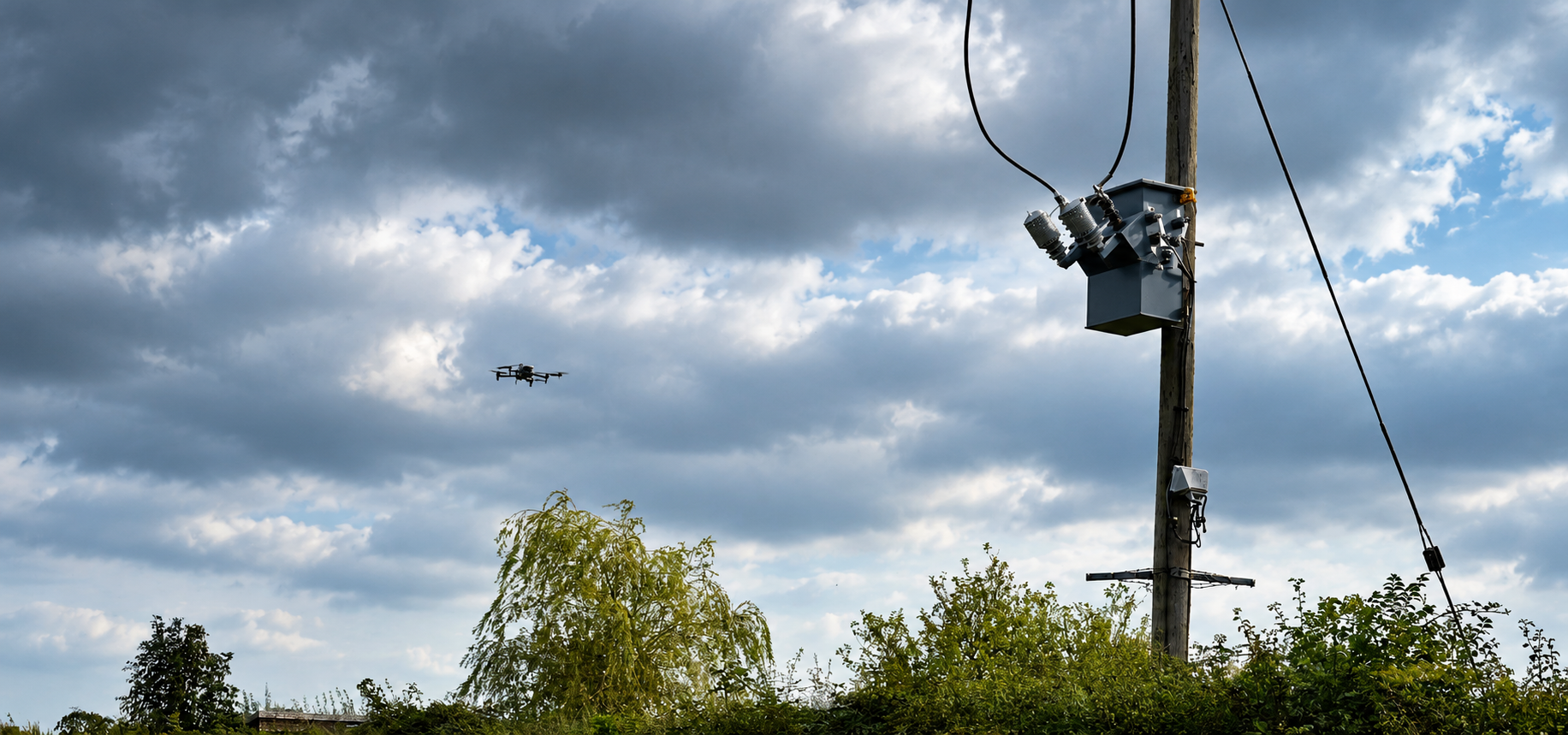
Team UAV inspecting pole-mounted transformers on behalf of NGED.
21 October 2026 – Team UAV has completed a drone inspection programme for National Grid Electricity Distribution (NGED), capturing high-resolution imagery of 500 pole-mounted transformers across its network to support an innovation project exploring how artificial intelligence (AI) could improve the way electrical infrastructure is inspected and maintained.
Funded through the Network Innovation Allowance (NIA), the project aims to investigate how drone imagery and computer vision can be used to identify visible signs of deterioration, including corrosion. This could help NGED better understand asset condition, identify potential issues earlier and make more informed maintenance decisions.
Team UAV was responsible for developing and delivering the drone inspection programme, while fellow NGED supplier Softwire is developing the computer vision models and prototype web application that will use the imagery to assess transformer condition.
Before inspections began, Team UAV carried out a series of technical trials to identify the most suitable equipment, camera positions and capture techniques. A key part of this work was developing a consistent approach to collecting imagery, ensuring that photographs taken at different locations could be used effectively for AI analysis.
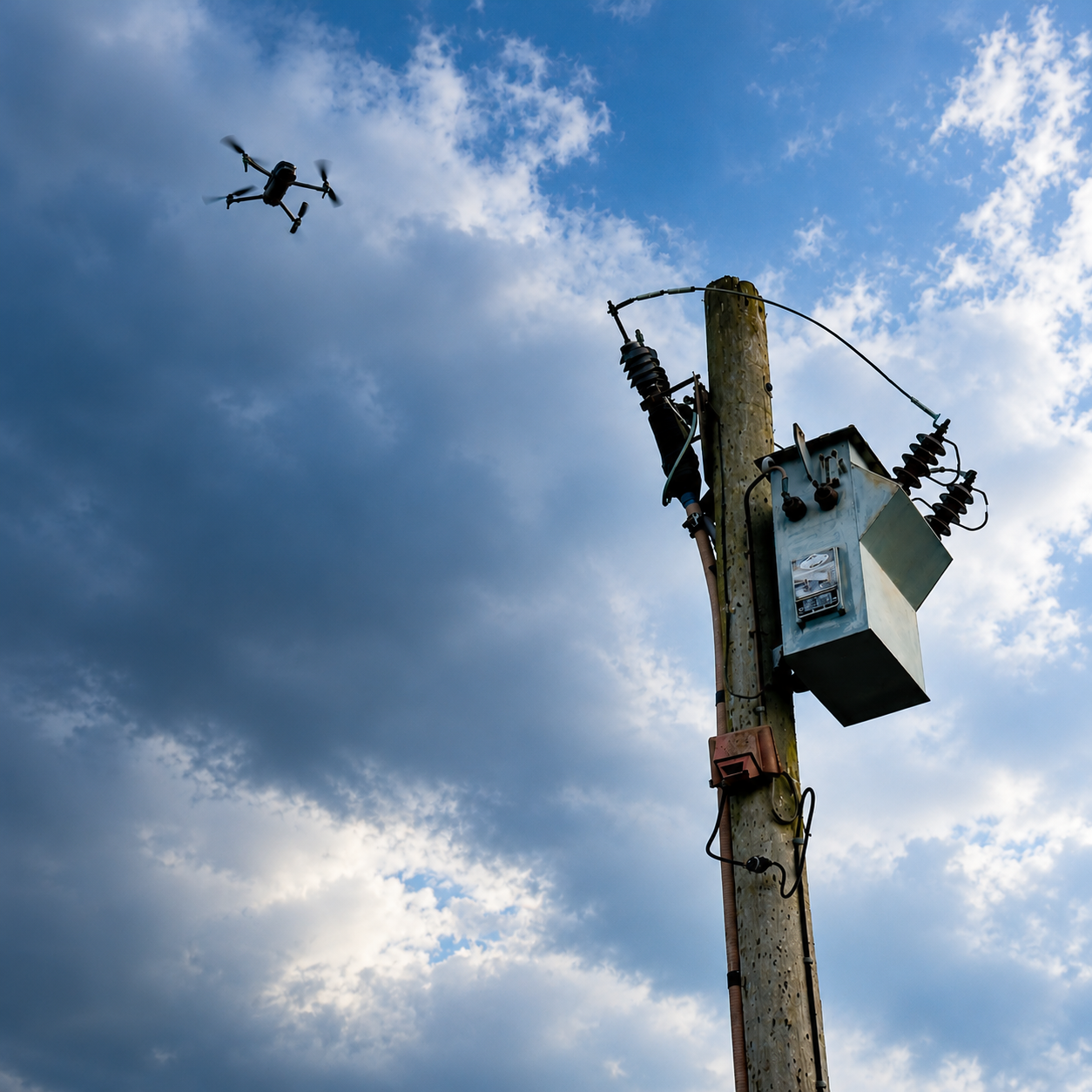
Working across NGED’s national asset list, Team UAV planned and delivered inspections across Cornwall, Wales, and the Midlands, identifying suitable locations and alternative assets where access restrictions, vegetation or missing infrastructure prevented inspections from taking place.
Alongside the inspections, Team UAV built a custom GIS database and delivery process, allowing imagery to be uploaded from the field, linked to individual transformer locations and stored alongside relevant survey information and metadata. This ensured that each set of images could be accurately matched to the correct asset and prepared for the next stage of the project.
Mark DeGiovanni, Technical Lead, Team UAV, said:
“Inspecting large numbers of assets across different locations presents a real challenge for electricity network operators, particularly when access is restricted or infrastructure is difficult to reach. For this project, our focus was on developing a consistent and repeatable approach to drone inspections, ensuring the imagery we collected was suitable for the next stage of AI analysis.
“Working with NGED and Softwire has been a great opportunity to demonstrate how specialist drone operations and data science can work together. By combining our experience in infrastructure inspections and data capture with Softwire's expertise in AI and software development, we're helping to explore a more efficient approach to assessing asset condition, with the potential to support better maintenance decisions across electricity networks.”
Marcus Gardiner, Client Director, Energy & Utilities at Softwire, said:
“We are delighted to be working with NGED and Team UAV on an innovation project with the potential to improve how hard-to-reach assets are inspected and managed. It is a powerful example of how data science and engineering expertise can be applied to complex real-world problems, supporting better operational decisions and the long-term resilience of essential public infrastructure.”
Favour Eboh, Innovation Engineer at National Grid Electricity Distribution, said:
“Pole-mounted transformers play a critical role in delivering electricity to homes and businesses, particularly in rural communities.
“This innovation project will explore whether aerial imagery, AI, and computer vision can automate aspects of the condition assessment process, generating more consistent condition data to inform asset health reporting and investment decisions.
“Working with Softwire and Team UAV, we will test the technology on an initial set of transformers and assess its potential to support future network asset management.”
With Team UAV's drone inspection programme complete, Softwire will use the collected imagery to develop and test its AI models and prototype application. The initial phase of the wider innovation project is expected to be completed by the end of 2026.
The project will explore how drone inspections and AI analysis could help electricity network operators monitor assets more effectively, identify potential issues earlier and better plan future maintenance.
About the organisations involved
About National Grid Electricity Distribution
National Grid Electricity Distribution owns and operates the local electricity network across the Midlands, South West and South Wales. It is a distribution network operator and is separate from National Grid Electricity Transmission.
Team UAV is a UK specialist in drone inspection, survey and monitoring services for critical national infrastructure. Established in 2013 and part of PDG Aviation Services, the company supports organisations across the utilities industry. Combining operational expertise with drone and sensor technology, Team UAV captures high-quality imagery and asset data to help customers assess infrastructure condition, plan maintenance and make informed decisions. Its services range from detailed inspections of individual assets to large-scale surveys and remotely operated drone programmes.
Softwire is a UK technology consultancy. Independent thinking, independent ownership and platform-agnostic technology shape how we work, backed by experienced teams and proven delivery. We help organisations move past fragmented data, legacy systems and stalled AI pilots to reach production-scale results by blending data science, software engineering, digital product and AI expertise. We've been recognised by the Financial Times as a leading UK Management Consultancy for five consecutive years, and our work spans energy and utilities, public sector, financial services, insurance and healthcare.