Heavy lift drones can be used to move equipment, materials or specialist payloads across suitable sites. They are especially useful where access is difficult, time-sensitive, remote or disruptive using traditional methods.
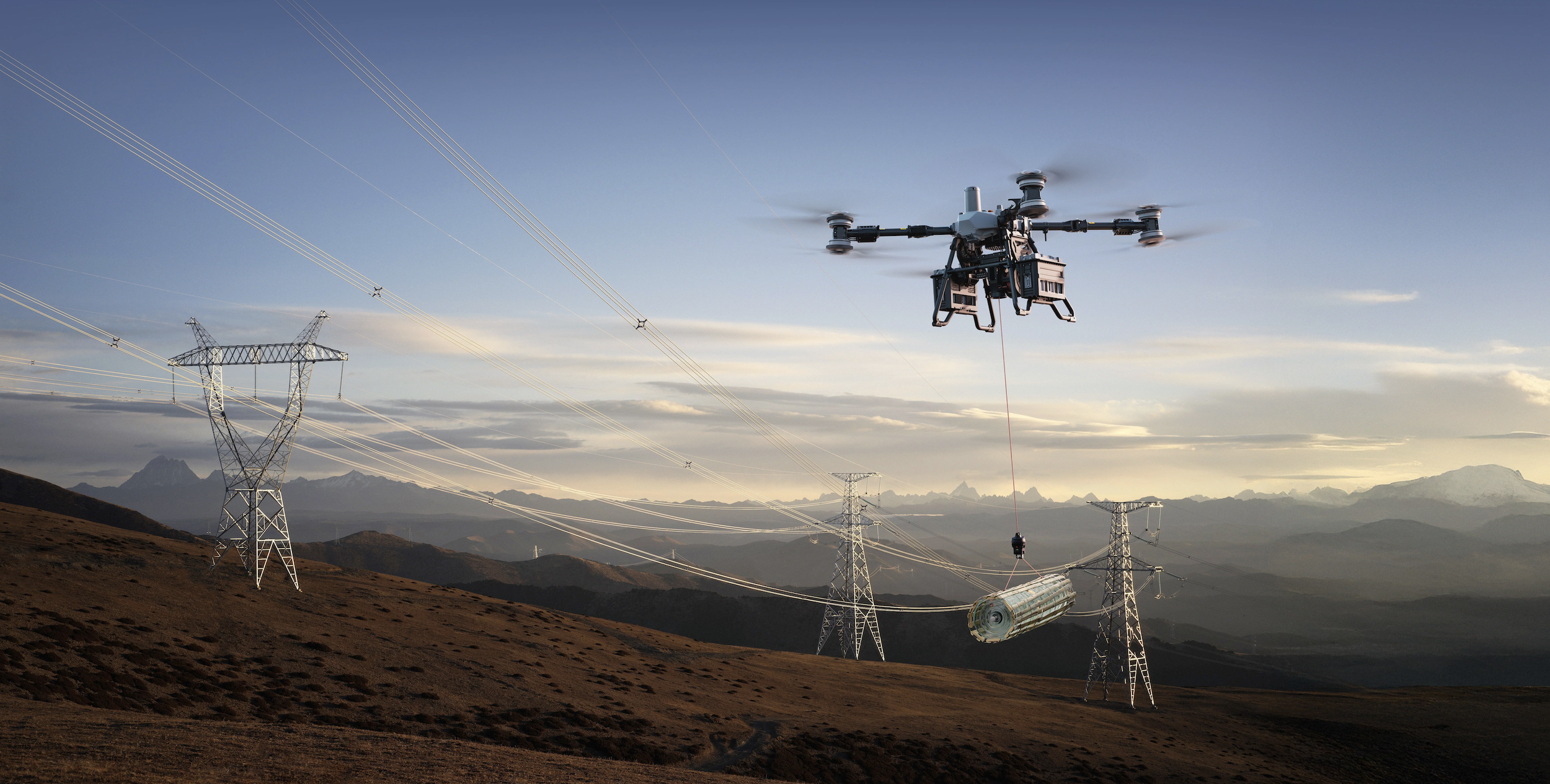
Typical applications include construction logistics, emergency response, utility sites, remote infrastructure, industrial operations and delivery to hard-to-reach locations.
Heavy lift drones can move tools, parts, samples, materials and emergency supplies.
They can support construction, utilities, infrastructure and industrial sites.
Winch systems can allow payloads to be lowered without landing.
They may reduce the need for some vehicle movements or manual carrying.
Each use case needs a site-specific safety and regulatory assessment.
What does this mean?
A heavy lift drone is not just a larger version of a normal inspection drone.
Its value comes from moving useful payloads between points. That might mean transporting parts across a construction site, delivering equipment to a remote asset, moving supplies during an emergency or carrying materials where ground access is difficult.
Some aircraft can use a cargo box. Others can use a winch system, allowing the drone to hover and lower the payload to a controlled point. DJI lists the FlyCart 30 with both cargo and optional winch system capability, and the newer FlyCart 100 is positioned around heavier delivery use cases.
Why does it matter?
Many sites have logistics problems that are not solved easily by standard vehicles or manual access.
A heavy lift drone could help where routes are slow, access is restricted, terrain is difficult or urgent delivery is needed. This does not mean it replaces all existing logistics, but it can provide another option for specific tasks.
For asset owners and operators, the key benefit is getting the right item to the right place more efficiently when the conditions make sense.
Team UAV Insight
At Team UAV, heavy lift use cases need to be assessed practically.
A drone might have the payload capacity on paper, but the real-world operation depends on many factors, including wind, distance, landing area, battery performance, payload shape, site layout, people nearby and emergency planning.
That is why we approach heavy lift as an end-to-end operation. The aircraft is only one part of the solution. The method, planning, controls and client workflow matter just as much.
Speak to Team UAV
Team UAV supports organisations exploring heavy lift drone applications across construction, utilities, infrastructure and industrial sites.
Get in touch with our team to discuss your use case.
FAQS
-
Yes, where the aircraft, payload, route and operating conditions are suitable. The payload must be secured and the operation must be planned properly.
-
Yes, they can potentially support movement of materials, tools or equipment across construction sites, subject to site assessment and permissions.
-
Some heavy lift drones can use winch systems to lower payloads without landing, depending on the aircraft and configuration.