How does DJI Dock 3 work with DJI FlightHub 2?
DJI Dock 3 works with DJI FlightHub 2 by combining the physical drone dock with cloud-based mission planning, remote operation, live viewing, data management and equipment monitoring. DJI describes FlightHub 2 as a cloud-based drone operations platform, while Dock 3 provides the drone-in-a-box hardware for remote and repeatable operations.
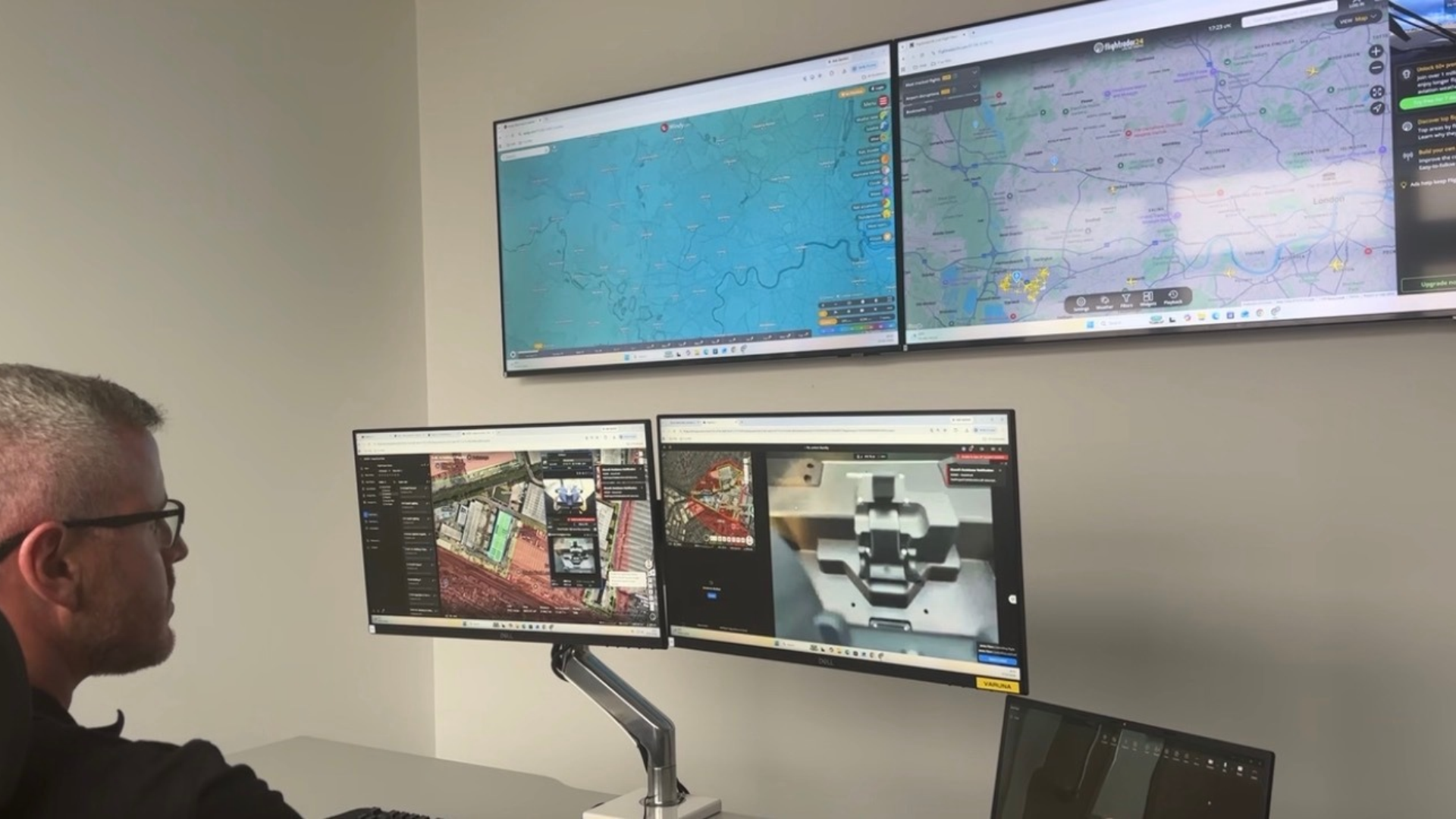
For organisations exploring remote monitoring, site visibility, security, infrastructure inspection or repeat data capture, the dock and software need to be considered together.
DJI Dock 3 provides the physical docking station for remote drone operations.
DJI FlightHub 2 supports planning, control, live viewing and mission management.
Together, they can support repeatable drone workflows.
FlightHub 2 can help teams manage routes, data, alerts and remote equipment status.
The right setup depends on the site, use case, operating model and support requirements.
What does this mean?
DJI Dock 3 is the base station.
It houses the drone, supports take-off and landing, and enables dock-based deployment from a fixed or managed location. DJI states that Dock 3 is equipped with Matrice 4D or Matrice 4TD aircraft and supports 24/7 remote operations, including vehicle-mounted deployment for the first time in DJI's dock range.
DJI FlightHub 2 is the software layer.
It helps teams plan missions, manage flight routes, view live information, review collected data and monitor dock and aircraft status. DJI describes FlightHub 2 as a one-stop cloud-based platform for drone operations management, with remote control, flight scheduling, route management and integration features.
Together, Dock 3 and FlightHub 2 can support a more structured remote operations workflow.
Why does it matter?
A drone dock is only useful if the wider workflow works properly.
The organisation needs to understand what the drone will capture, who will manage the system, how missions will be planned, how data will be reviewed and what happens when the system identifies an issue.
FlightHub 2 helps connect those parts of the operation. DJI states that FlightHub 2 can support flight records, alerts, remote maintenance and visibility of dock and drone status, which are important considerations for repeatable remote workflows.
This matters for clients looking at security patrols, infrastructure monitoring, site progress, asset inspection, emergency response or regular condition checks. The value is not just launching a drone remotely. It is creating a managed workflow that produces useful, reviewable data.
Team UAV Insight
Team UAV is an official DJI Enterprise Reseller, but we are operators first.
That means we look at DJI Dock 3 and DJI FlightHub 2 as an operational system, not just a product bundle. The dock, aircraft, software, site, connectivity, data requirement and support model all need to work together.
For some clients, Dock 3 and FlightHub 2 may support remote monitoring, security, infrastructure inspection or repeat visibility across a site. For others, a standard drone service, mobile deployment or different enterprise setup may be more suitable.
Our focus is on helping clients understand whether dock-based operations are genuinely useful for their site and what needs to be in place before investing.
Speak to Team UAV
Team UAV supports organisations exploring DJI Dock 3, DJI FlightHub 2, remote monitoring and drone-in-a-box workflows.
Get in touch with our team to discuss your site, use case and whether a dock-based drone system is the right fit.
FAQS
-
DJI FlightHub 2 supports the software side of dock-based operations, including mission planning, route management, live viewing, data review, alerts and remote equipment monitoring.
-
A dock-based system needs more than hardware. Without clear mission planning, data management, review processes and operational support, the system may not deliver useful value.
-
No. Site suitability, connectivity, airspace, permissions, security requirements, data needs and operating model all need to be assessed before deciding whether Dock 3 and FlightHub 2 are the right approach.