Can DJI Dock 3 support BVLOS operations?
DJI Dock 3 can form part of a remote drone operation that may support BVLOS workflows, but BVLOS depends on the full operating model, permissions, site risk, airspace, procedures and regulatory approval.
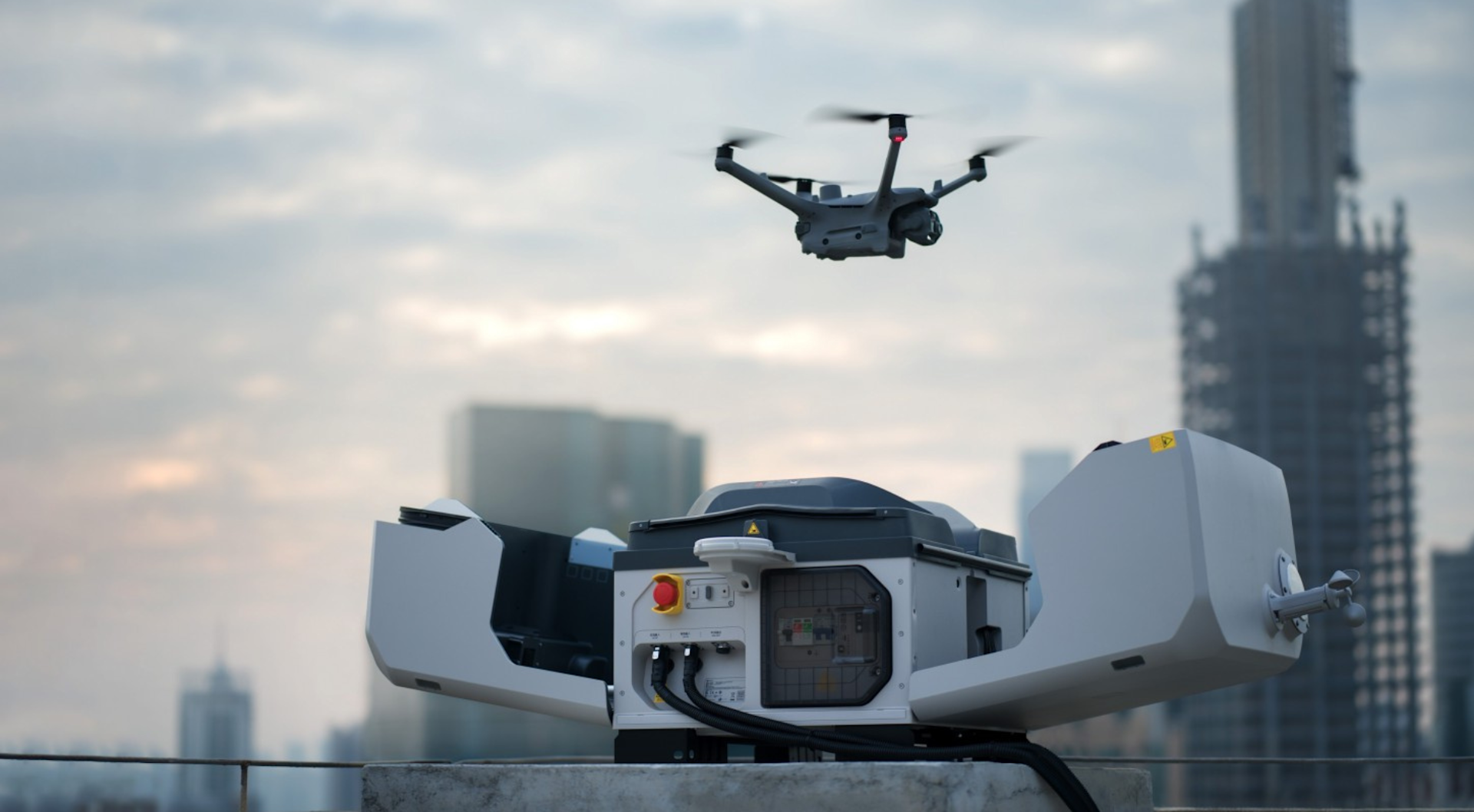
The dock alone does not make an operation BVLOS-ready. DJI states that Dock 3 is designed for remote operations with Matrice 4D or Matrice 4TD aircraft and DJI FlightHub 2, but regulatory permission is a separate requirement.
DJI Dock 3 can support remote and repeatable drone operations.
BVLOS means operating without maintaining visual line of sight.
BVLOS is not automatically approved because a site has a drone dock.
Air risk, ground risk, permissions, procedures and oversight all matter.
BVLOS planning should begin before equipment is installed.
What does this mean?
BVLOS stands for Beyond Visual Line of Sight. In simple terms, it means operating a drone when the remote pilot does not maintain direct visual line of sight with the aircraft. The CAA states that BVLOS flying must not be carried out unless the operator has an Operational Authorisation that permits BVLOS operations.
DJI Dock 3 can support remote operation by giving a compatible aircraft a dedicated base for storage, charging, launch and landing. When combined with suitable software, connectivity and operating procedures, this can help organisations plan, launch, monitor and repeat drone missions from a set location.
That does not mean the operation is automatically BVLOS. BVLOS is not just about flying further away. It is about proving that the operation can be managed safely when the aircraft is not being watched directly by the pilot.
Why does it matter?
For infrastructure, utilities, security, industrial sites and environmental monitoring, BVLOS workflows can be attractive because many assets are spread across large, remote or difficult-to-access areas. A docked drone system may help support regular checks, site monitoring, incident response, perimeter awareness, flood monitoring and repeatable asset records.
The value is not simply distance. The value is better access to current aerial information without repeated mobilisation for every task. For the right site and use case, Dock 3 may form part of a more scalable remote operations model.
However, every operation still needs to be assessed on its own merits. A secure utility site, an industrial compound, a construction project, a reservoir, a rail corridor and a public-facing environment can all present different levels of air risk, ground risk, operational complexity and regulatory challenge.
Operational Considerations
A BVLOS project should start with the use case and risk profile, not the hardware.
Site suitability matters. This includes the launch and landing area, nearby people, surrounding land use, airspace, obstacles, emergency landing options, security, access, power, connectivity and maintenance requirements.
Permissions are central. The CAA explains that the Specific Category covers operations that are more complex than those allowed in the Open Category. The CAA also states that UK SORA replaced the previous Operating Safety Case method as the way to apply for an Operational Authorisation in the Specific Category from 23 April 2025. Examples listed by the CAA include flying beyond visual line of sight.
Human oversight must also be clearly defined. Remote operations still need trained people, documented procedures, tasking controls, monitoring, maintenance records, emergency actions and contingency planning. Connectivity must be reliable enough to support the operating model, and data handling should be planned so captured information reaches the right people in a usable format.
Team UAV Insight
The biggest mistake is thinking BVLOS starts with buying a dock.
Team UAV is an operator-led DJI Enterprise supplier. We supply enterprise drone equipment, but we also support the operational structure around remote and more complex drone deployment.
That includes helping clients assess whether DJI Dock 3 is suitable for their site, how it could support their use case, what permissions and procedures may be needed, and how the system should be introduced safely. We support clients with equipment, operational planning, SORA and BVLOS considerations, training, deployment planning and ongoing support.
Speak to Team UAV
Speak to Team UAV if you are considering DJI Dock 3 and want practical support with equipment, operational planning, SORA and BVLOS considerations, training and deployment support.
FAQS
-
No. DJI Dock 3 can support remote operations, but BVLOS requires the correct authorisation, procedures, risk assessment and operating model.
-
A suitable site depends on airspace, ground risk, nearby people, connectivity, power, security, maintenance access and the intended use case.
-
BVLOS planning should begin early, before hardware installation, so the site, permissions, procedures and operational model can be assessed together.